
Chimney sweeping and cleaning in Littleton.
Soot and creosote come out of the flue, off the smoke shelf, and out of the firebox and stove pipe. Phone the office or book online.
- reviews on Googleas of
Office Mon to Fri 7 AM to 7 PM, Sat 8 AM to 5 PM. Book online any hour.Office open now, until Office opens . Book online now.
- Book onlineAny hour
Photo: Roxborough State Park 04, Sdkb, CC BY-SA 4.0
What a sweep does, from hearth to cap.
What comes out of the flue, how often it should, and what to settle before the first fire.
What the brush takes out.
Smoke leaves a film on the flue wall as it cools on the way up. At first the film is dry, flaky soot; with cool, slow fires it turns into a crusty tar, and left long enough it hardens into a glaze that a brush barely moves.
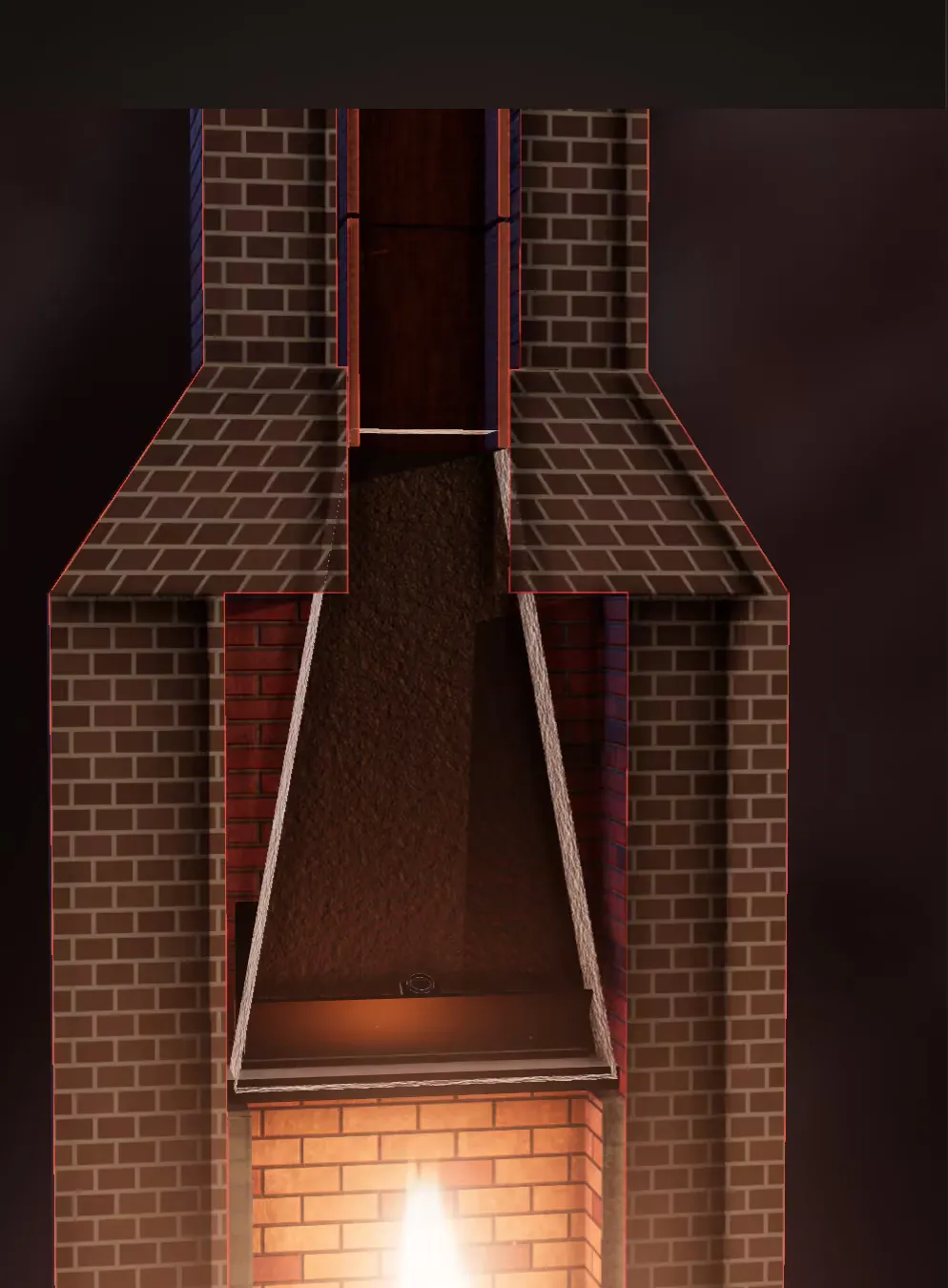
A sweep brushes that deposit from the flue wall, the smoke shelf over the damper and the floor of the firebox, and removes it entirely instead of leaving it to feed the next fire.
Illustration A clean flue, and why it matters.
Creosote burns, and that is what makes it dangerous: a chimney fire starts when the deposit catches inside a flue built for smoke, not flame. With the deposit gone, a stray spark finds nothing to burn.
A clean flue also draws better, so smoke goes up and out of the house instead of backing into the room when you open the damper or light the fire.
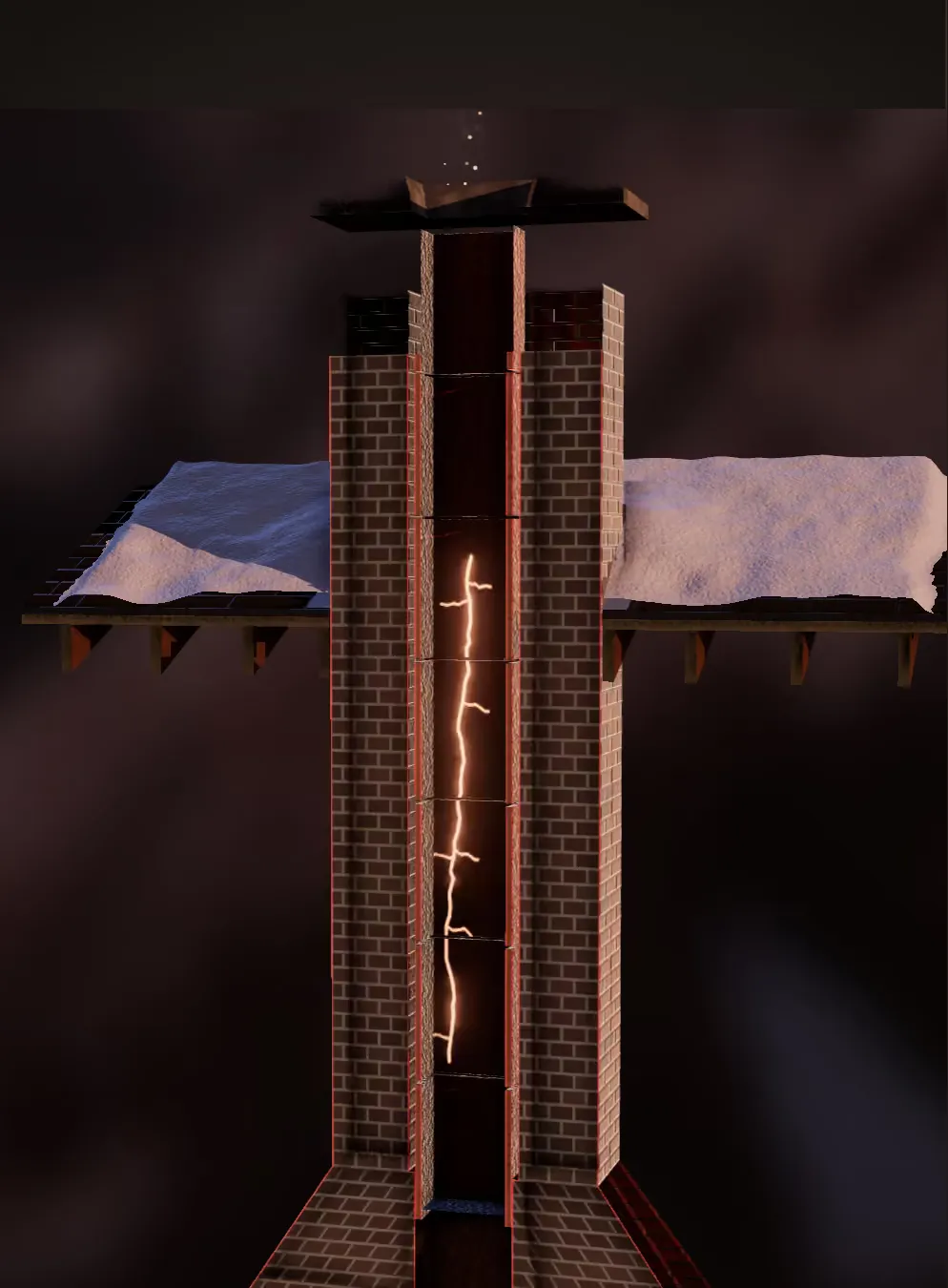
Illustration The top of the stack.
By the time smoke reaches the cap it is as cool as it will get, and that is where soot clings. Mesh that has filled in chokes the draft, yet it is also what holds back embers, so the top of the stack is cleaned with the rest.
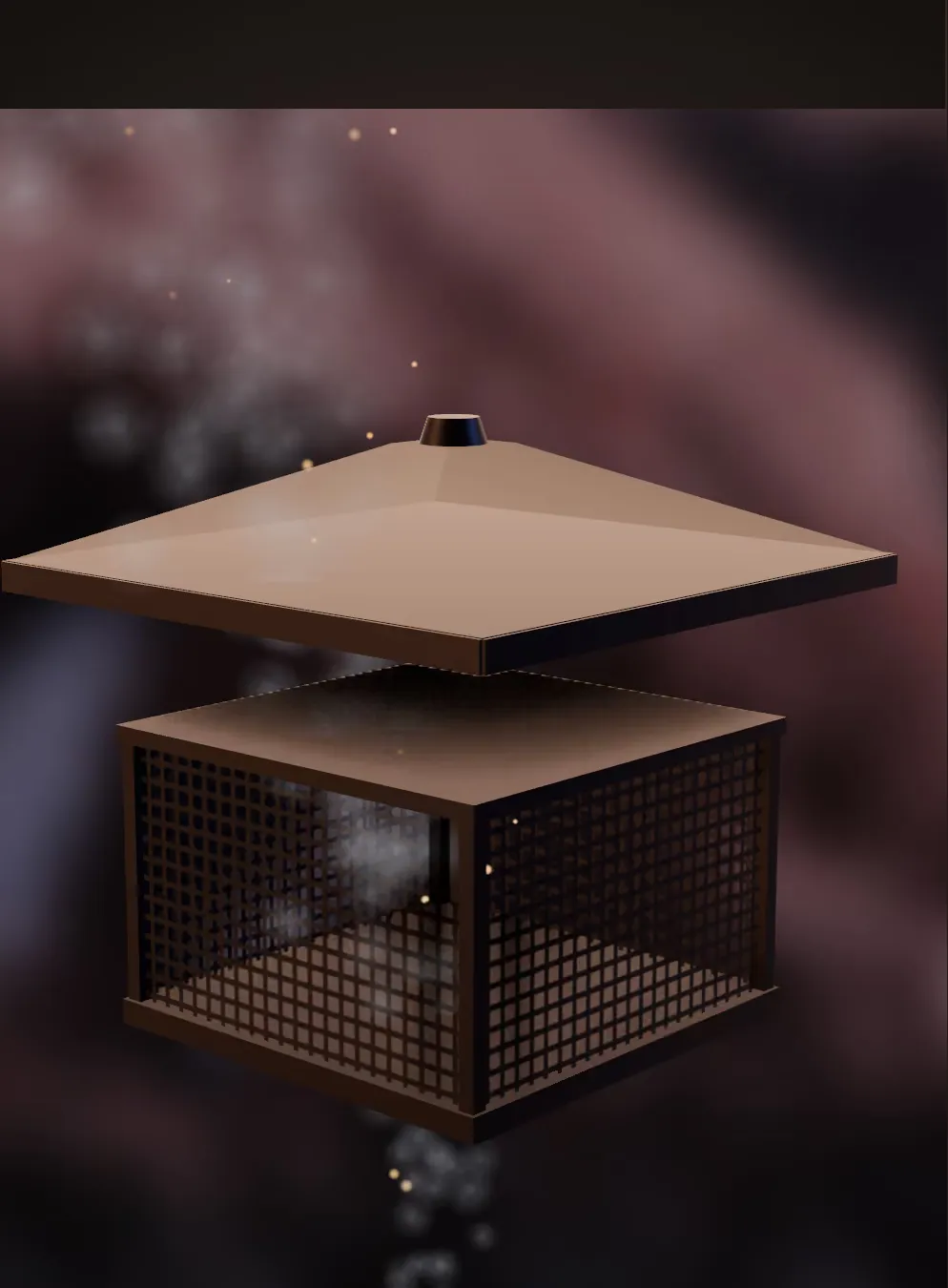
Illustration
Questions about sweeping.
Plain answers, and the source where there is one.
When is it time to sweep?
Check the deposit, not the date. Sweep at 1/8 inch, the Chimney Safety Institute of America’s rule of thumb, or sooner if the surface is shiny or glazed. NFPA asks for a yearly inspection, and that visit is where the thickness gets measured.
How is a sweep different from an inspection?
A sweep cleans; an inspection assesses. Inspecting means judging the chimney itself, from cap to firebox, at one of the three levels set out in NFPA 211. The two often share a visit because soot hides defects.
What does glazed creosote mean?
Glaze is a shiny, hardened, tar-like layer that builds when smoke runs cool and slow, as in a damped-down stove. It is far harder to remove than dry soot, so a glaze is a reason to sweep sooner.
Does a gas fireplace need sweeping?
A gas appliance leaves no creosote, but its vent still has to be open: nests, leaves and pieces of a failing liner can block it. NFPA 211 recommends inspecting gas venting every year as well.
Why does the fireplace smell worse in summer?
Creosote gives off its odor most when the air is warm and damp, and a downdraft can push it down the flue into the room. Removing the deposit fixes the cause; a tight damper and a cap hold back what remains.
How do I book a sweep?
Phone (720) 792-3635 (Mon to Fri 7 AM to 7 PM, Sat 8 AM to 5 PM), or use the form on this page whenever you like, and we ring back to set a time.

Book a visit.
Describe the problem on the form, or simply phone, and we will call back to set a time.
- 1Ask Phone the office or send the form.
- 2Callback We ring back to set a time that suits you.
- 3Visit We work down the chimney, cap first.
- 4Your call You decide what is done, and when.
Online
At any hour, by form
Photo: Roxborough Panorama, Footwarrior, CC BY-SA 3.0
Ready for the first fire of the season, or worried by something you saw up there?
Office Mon to Fri 7 AM to 7 PM, Sat 8 AM to 5 PM. Book online any hour.Office open now, until Office opens . Book online now.
Book online